Airline Baggage Weight vs Passenger Weight
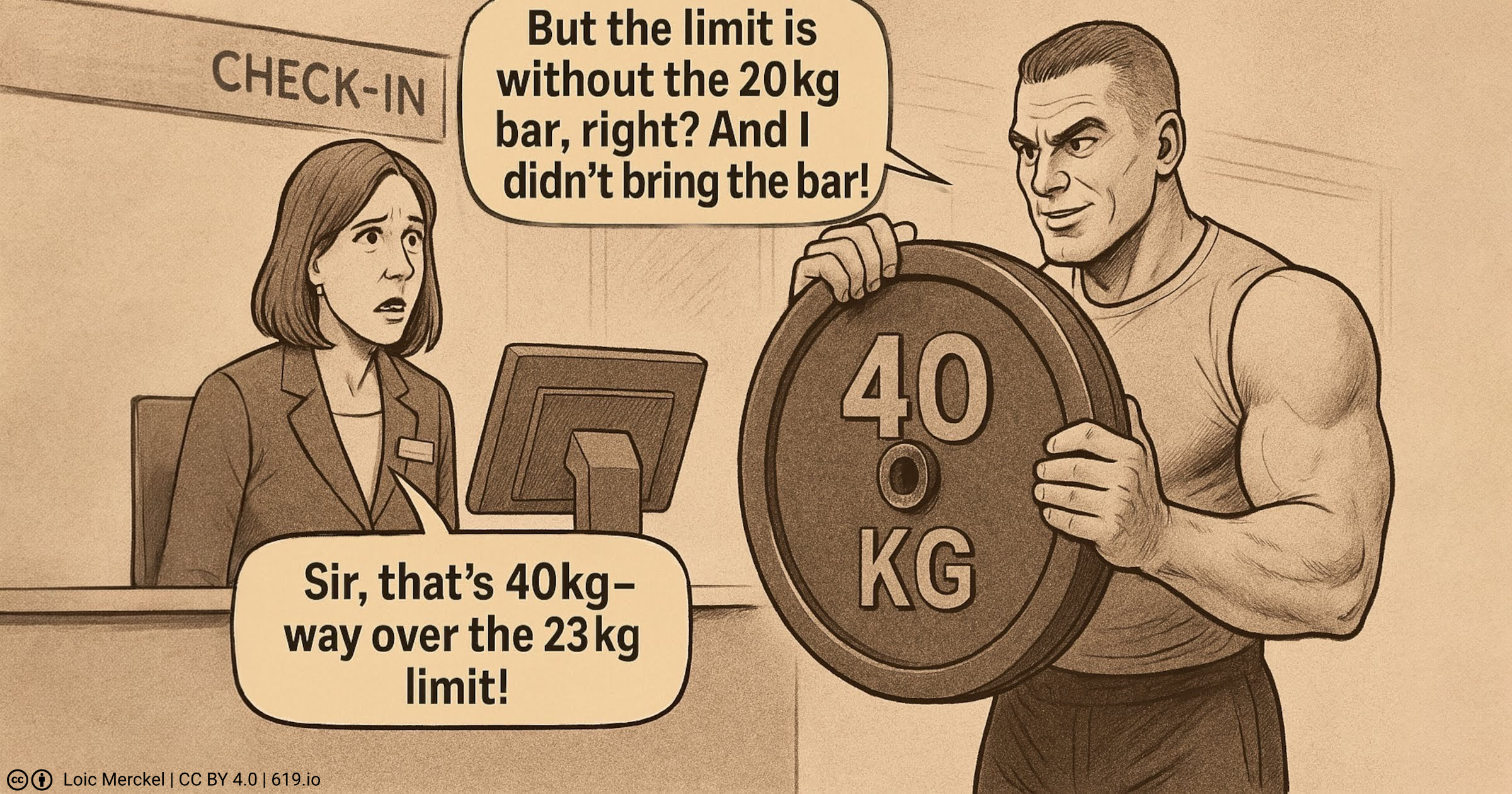
✈️ Why do airlines care more about baggage weight than passenger weight?
A post that showed up on my feed compares a 100 kg traveler with a 24 kg suitcase to a 45 kg traveler with a 26 kg suitcase (see lnkd.in/eyvZhyZQ by Chris MAUGHAN). Sounds unfair? Maybe. But the reality is more nuanced, and grounded in operational needs, not just strategy.
Here is why the comparison misses the point 👇
Baggage weight limits are not just about total mass. They are critical for:
- Safe cargo distribution (aircraft balance), and
- Protecting ground staff from injury during manual handling.
Airlines plan based on average passenger weight assumptions, likely modeled with a normal distribution. With enough passengers, individual differences tend to smooth out and converge toward the expected mean—a method standardized by aviation authorities like EASA (e.g., see lnkd.in/ecM8GAEJ) and the FAA (e.g., see lnkd.in/e-8cyKtR) for its proven reliability.
But baggage is different: each item must be weighed precisely. Unlike passenger weights, the distribution of luggage is likely highly skewed and multi-modal:
- A sharp peak just under the economy limit (e.g., 23 kg)
- A secondary bump near the premium class allowance (e.g., 32–35 kg)
- Long tails from ultra-light packers and those paying for excess
This makes luggage weights far less predictable, and therefore more critical to monitor closely.
That said, there are also rare “tail events” where average-based planning is not enough (the Gaussian assumption becomes unsuitable). In October 2023, Japan Airlines had to schedule an extra flight for a group of sumo wrestlers because their combined weight exceeded standard assumptions and risked pushing the aircraft over its takeoff limit (lnkd.in/ekBcXuTi).
This is a perfect reminder: averages work for planning, but aviation safety relies on real-time judgment and safeguards to catch the exceptions.
P.S. I work in the airline industry. This analysis reflects my personal perspective based on publicly available data and standard operational principles.